
Health Library / Lifestyle
This content is for education only and is not medical advice. I'm a fitness coach, not a physician. Talk to your doctor before starting any medication, hormone, supplement, or new exercise program, especially if you have a medical condition or take prescriptions.
The recovery industry has gotten very good at selling you things, and the honest ranking doesn't match the price list. So here's my read, best evidence first, and I'll tell you where I'm confident and where I'm guessing.
Before any of it: sleep, food and not training like an idiot beat everything below. If those three aren't handled, a cold plunge is a fourteen thousand dollar apology.
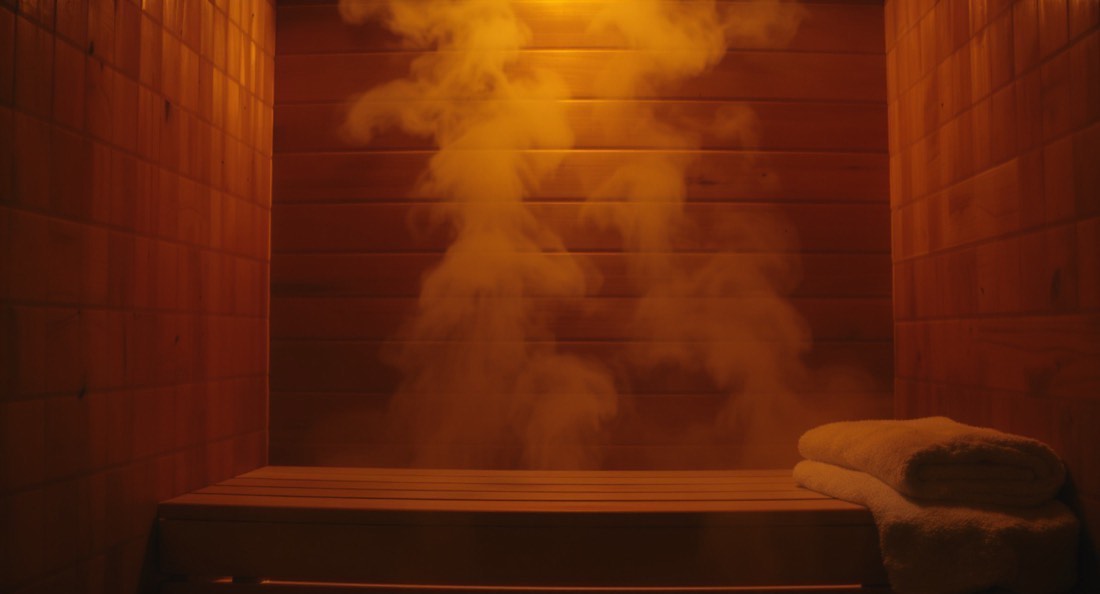
The most interesting data comes out of Finland, where they've followed large groups of middle-aged men for decades and can look at sauna frequency against long-term outcomes. Frequent sauna use is associated with lower cardiovascular and all-cause mortality, and the relationship scales with how often people go.
That's a striking finding. Two caveats I'd want you to hold.
It's observational — these are people who chose to sauna, followed over time, not people randomly assigned. The researchers adjust for what they can, but people who sauna four times a week may differ in ways nobody measured.
And it's Finland, where this is deeply cultural, which makes it hard to know how much transfers.
That said, the plausible mechanism is decent: heat stress raises heart rate and dilates vessels in a way that looks a bit like moderate exercise, and there's research on blood pressure and vascular function supporting it. Of everything in this module, sauna has the most behind it. It also feels great, which matters for whether you keep doing it.
Cold exposure does things. It's not a placebo. It blunts perceived soreness, people report feeling better, and there's a mood and alertness effect that's noticeable and probably why it's caught on.
Here's the finding that should change how you use it: cold water immersion right after resistance training appears to blunt the muscle-building adaptation from that session. Several studies point this direction. The working explanation is that the inflammatory signalling you're suppressing is part of the message that tells the muscle to adapt. Inflammation after training isn't damage to be extinguished. Some of it is the point.
So if you're lifting to build or hold muscle — which is most of you — don't plunge straight after lifting. Put hours between them, or use it on non-lifting days, or use it before. On the day before a competition, or when you just need to feel human after a brutal week, it's fine. As a habit immediately post-session, you may be paying for training and then partly cancelling it.
There's real science in photobiomodulation and some plausible mechanisms at the cellular level. There are also small studies suggesting benefits for muscle recovery and skin.
What there isn't: a strong, consistent body of human evidence supporting the claims on the panels being sold for thousands of dollars. Studies are small, protocols vary wildly, and the field hasn't converged. I'd call it promising and unproven, and I wouldn't spend serious money on it before the more boring things are handled.
Massage reliably makes people feel better and reduces perceived soreness. Whether it accelerates actual tissue recovery is much less clear. Feeling better isn't nothing — it affects whether you train tomorrow — but that's a different claim from speeding repair. Get one because it's good, not because it's magic.
Compression garments have modest support for perceived soreness and maybe a bit for swelling. Harmless, not transformative. Boots are a luxury, not a tool.
This is the part I need you to read.
Extreme heat and extreme cold both stress your cardiovascular system. Heat drops blood pressure and raises heart rate. Cold immersion causes a sharp gasp reflex, a spike in blood pressure and a jump in cardiac demand in the first seconds — that initial shock is the risky moment.
If you have a heart condition, uncontrolled or unstable blood pressure, a history of arrhythmia or fainting, or you're pregnant, get cleared by your doctor before either. Same if you're on medication affecting heart rate or blood pressure — some of them change how you respond to heat and cold in ways you wouldn't predict.
And don't do either alone if you're new to it. Not being dramatic: people faint in saunas, and fainting alone in a hot room or a cold tub is how a recovery session becomes an emergency.
Sleep. Food. Sensible programming. Walking. Then sauna if you enjoy it, cold away from your lifting, massage because it's pleasant, and red light if you've got money left and nothing better to do with it.
These are listed for reference, not as recommendations. Ockerman Health has no financial relationship with any provider listed here, receives nothing for these links, and does not endorse, vouch for or verify any of them. They appear because they publicly advertise the services this article explains, so you can see for yourself what's being offered and what it costs. Anything on this list is between you and them — and anything medical is between you and your doctor.
Last updated September 30, 2026