
Health Library / Longevity tech
This content is for education only and is not medical advice. I'm a fitness coach, not a physician. Talk to your doctor before starting any medication, hormone, supplement, or new exercise program, especially if you have a medical condition or take prescriptions.
Hyperbaric oxygen is the most interesting thing on the longevity menu, and it's also the one where you're most likely to pay for something quite different from what you read about.
There's a single number that determines almost everything: the pressure. Learn to ask for it and you'll understand this topic better than most of the people selling it.
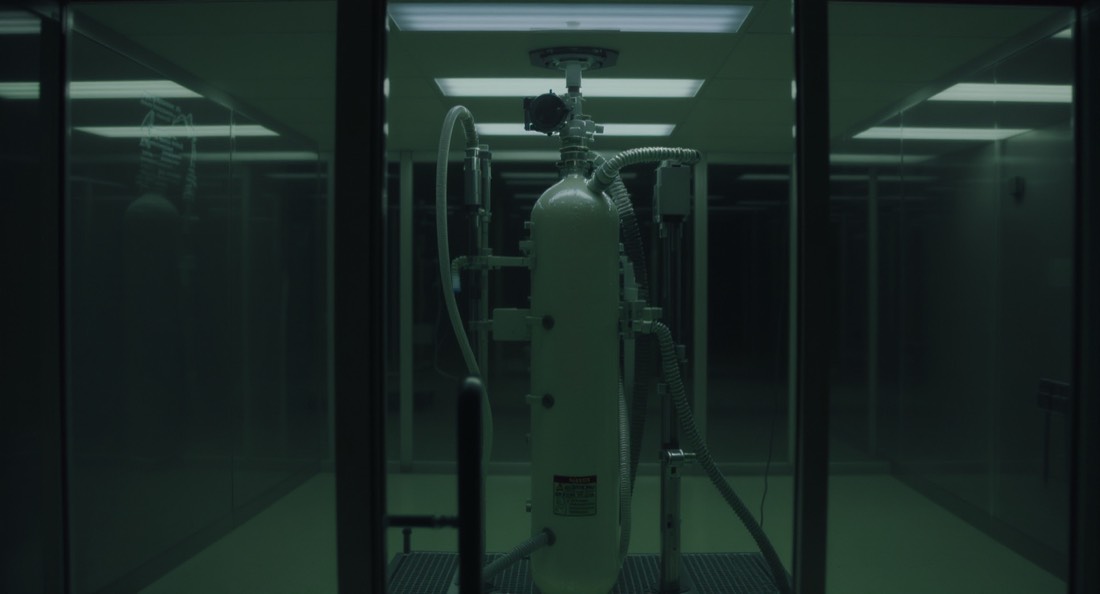
You sit or lie in a sealed chamber. The pressure goes up above normal atmospheric, and you breathe oxygen-enriched air. Under pressure, far more oxygen dissolves directly into your blood plasma rather than riding on red blood cells — which means oxygen reaches tissue it normally struggles to reach, including places where circulation is poor.
That's not a wellness theory. It's physics, and it's why hyperbaric medicine exists at all.
Pressure is measured in ATA — atmospheres absolute. Normal air at sea level is 1.0 ATA.
There's an established list of conditions where hyperbaric oxygen is genuine, evidence-based treatment, recognized by the Undersea and Hyperbaric Medical Society and covered by insurance: decompression sickness, carbon monoxide poisoning, gas gangrene, certain non-healing diabetic foot ulcers, delayed radiation injury, some crush injuries and failing skin grafts.
Every one of those was studied at 2.0 ATA or above, in a rigid clinical chamber, under medical supervision.
In 2020, a research group in Israel led by Shai Efrati put 35 healthy adults aged 64 and over through 60 hyperbaric sessions across 90 days, and measured their blood cells before and after.
The results got enormous coverage and they were striking: telomere length in several immune cell types increased by over 20%, with some measures up around 38%, and senescent cells — worn-out cells that accumulate with age and drive inflammation — dropped by up to 37%.
That's a genuinely remarkable finding and it's why hyperbaric turns up on every longevity menu in America.
Now the parts that get left out of the marketing, none of which make it worthless:
35 people, and no control group. It was a single-arm prospective trial. That's a legitimate early study design, and it's not the same as a randomized controlled trial.
The measurements were in isolated blood cells. Telomeres got longer in immune cells in a dish. Whether that translates into living longer or better is a separate question this study did not answer and did not claim to.
The protocol was serious. Sixty sessions in ninety days, at clinical pressure, on a specific schedule. That's a near-daily commitment for three months, not a drop-in.
Most wellness centers don't offer that. They offer mild hyperbaric, typically around 1.3 ATA, often in a soft-sided inflatable chamber. Restore's Austin locations list "Mild Hyperbaric Oxygen Therapy" plainly, to their credit.
The difference isn't a matter of degree. A published review argued the two shouldn't even be called the same therapy, and the numbers explain why. In patients with chronic wounds, tissue oxygen measured at around 1.4 ATA came in at single-digit to low-double-digit mmHg. At 2.0 ATA it ran several times higher. Comparing arterial oxygen, a clinical chamber at 2.4 ATA on pure oxygen produces something on the order of eight times what a soft chamber at 1.3 ATA delivers.
And the regulatory line is clear: soft chambers are FDA-cleared for
altitude sickness. That's the cleared indication. Every condition on the recognized list was studied in a hard chamber at clinical pressure.
So when a center cites the telomere study and then sells you 1.3 ATA sessions, the study doesn't transfer. It might still do something — mild pressure isn't nothing, and people report better sleep and clearer heads. But you should know you're not buying the thing in the headline.
Forty-five to ninety minutes. In a hard chamber you're usually sitting or lying in a clear tube, wearing a mask or hood; in a soft one you're zipped into something like a large inflatable sleeping bag. You'll feel your ears need clearing on the way down, like a plane descending, and staff will coach you through it.
It's boring. People read, listen to podcasts or sleep. Most of the cost is that it's a genuine time commitment — the protocols that show results involve dozens of sessions, not three.
Prices at wellness centers commonly run somewhere in the tens to low hundreds per session, often bundled into memberships. Clinical courses billed through insurance for a recognized indication are a different financial universe.
Post-concussion and traumatic brain injury — an active research area and a real reason many people try it. Long COVID, where several Austin clinics market it specifically. Athletes for recovery. Post-surgical healing. Longevity clients running the Efrati-style protocol at clinics that offer clinical pressure. And people with chronic wounds or radiation injury, who are getting actual medicine for an actual indication.
Ear barotrauma is the common one — pressure injury to the eardrum, usually avoidable with proper equalizing. Temporary vision changes happen with extended courses and typically resolve. Oxygen toxicity and seizures are rare and pressure-dependent. Fire risk is the reason chambers have strict rules about what goes in with you — no lighters, no certain fabrics, and you should expect to be asked.
People with untreated pneumothorax, certain lung conditions, or recent ear surgery need medical clearance first, and some chemotherapy drugs interact. This is the one item on the longevity menu where a screening conversation is genuinely part of the product, not a formality.
Walk in and ask: "What pressure do you run, and is it a hard or soft chamber?"
If they say 1.3 in a soft chamber, that's fine — just price it as what it is. If they quote the telomere research at you while running 1.3, you now know more than they're telling you.
And if you're chasing the research protocol specifically, you're looking for a clinical-pressure chamber and a commitment of dozens of sessions. That's a real undertaking, and worth knowing before you start rather than forty sessions in.
These are listed for reference, not as recommendations. Ockerman Health has no financial relationship with any provider listed here, receives nothing for these links, and does not endorse, vouch for or verify any of them. They appear because they publicly advertise the services this article explains, so you can see for yourself what's being offered and what it costs. Anything on this list is between you and them — and anything medical is between you and your doctor.
Last updated September 30, 2026